
Consulting is not an easy career. Particularly if you want to start and run your own consulting business.
Are you sure you want to start consulting? Or maybe what you have in mind is more like contracting? Many of the people I meet who say they are independent consultants, are really contracting not consulting. And hey, that’s fine. But what’s the difference? Here are my thoughts on it.
What Actually Separates Contractors from Consultants

Use Consultants Effectively: Download PDF
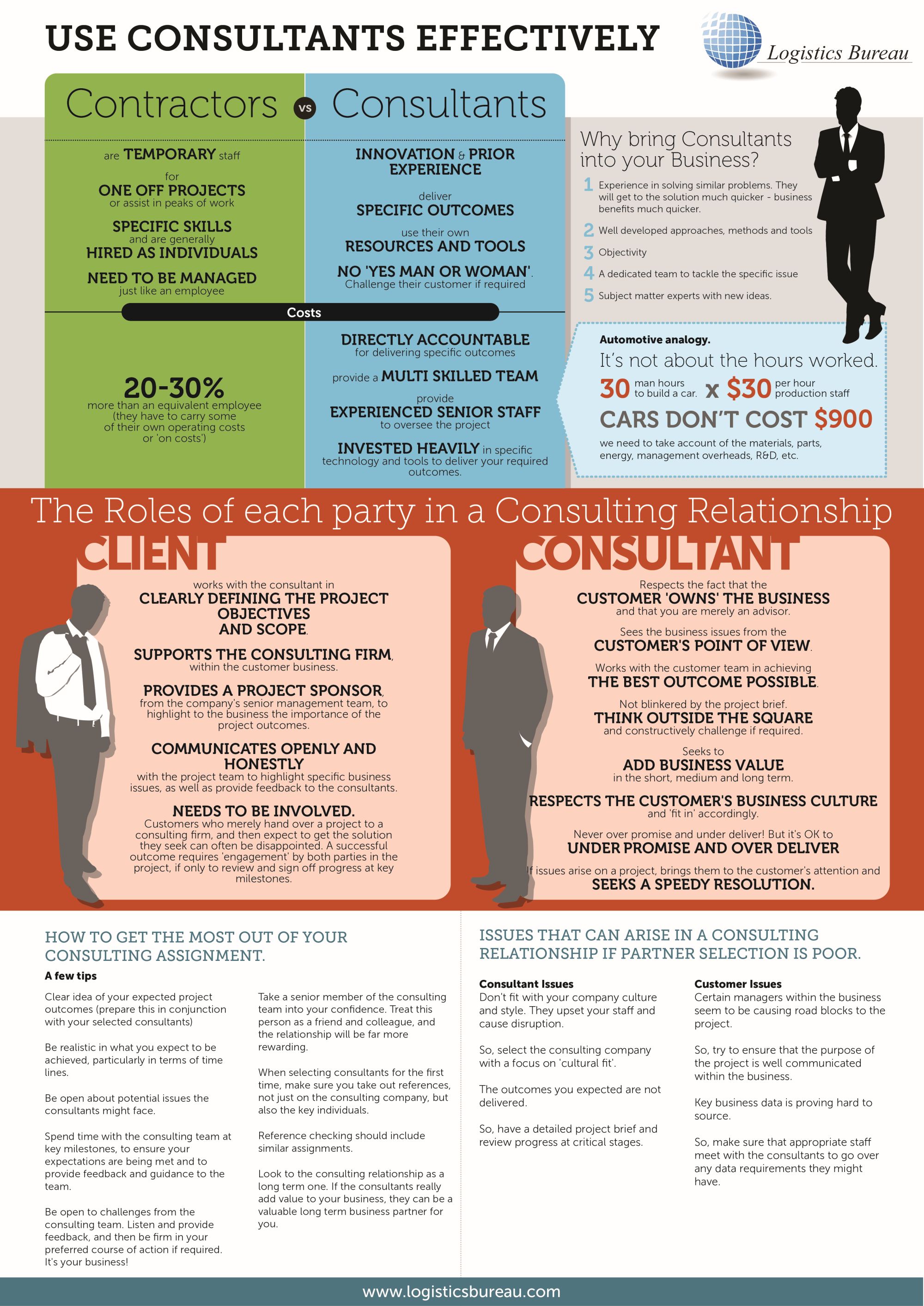
Contractors are essentially temporary staff. A company has a peak period, or a specific project, or a skills gap they need filled, so they bring someone in. You’re hired as an individual, you use the client’s resources and tools, and honestly, you need to be managed much like an employee would be. The work is usually well-defined. Show up, do the thing, get paid.
Consultants bring something else entirely. You’re not filling a seat, you’re solving a problem. You show up with your own methodology, your own frameworks, your own tools. There’s no “yes man or woman” dynamic here. Part of your job is actually to challenge the client when needed. You’re accountable for delivering specific outcomes, not just logging hours.
The cost difference reflects this. Contractors typically run 20-30% more than an equivalent employee when you factor in their overhead. Consultants? The math works completely differently because you’re not buying time—you’re buying expertise and results.
Why This Matters for Your Business
Here’s the thing. If you set out to build a consulting business but you’re actually doing contract work, you’ll struggle. Your pricing will be wrong. Your marketing will attract the wrong clients. Your delivery model won’t fit.
I’ve seen people position themselves as “strategy consultants” when what they’re really offering is interim management. That’s fine work, but call it what it is. The client expectations are different, the sales process is different, and the way you add value is different.
The Consulting Relationship Dynamic
When you’re genuinely consulting, there’s a particular dynamic that needs to exist between you and the client. Both sides have responsibilities.
On the client side, they need to clearly define what they’re trying to achieve, which is the objectives and scope. They need to provide a project sponsor, someone senior who can champion the work internally. And they need to actually engage with the process. I’ve seen too many situations where a company hires consultants, hands over the problem, and then expects magic. That rarely works. Successful outcomes require the client to be involved, even if it’s just reviewing progress at key milestones.
On your side as the consultant, you need to genuinely respect that the client owns the business. You’re an advisor, not a decision-maker. See things from their perspective. Think beyond the brief when it makes sense, as sometimes the best value you add is pointing out something the client didn’t think to ask about. And for goodness sake, don’t overpromise. Under promise, over deliver. Always.
Making the Choice
So which are you building? A consulting practice or a contracting business?
Neither answer is wrong. Contracting can be lucrative and straightforward. Consulting can be more rewarding but it’s harder to establish. The important thing is being honest with yourself about which one you’re actually pursuing, and then building accordingly.
Thank you so much for taking the time to help others. You do not have to do it but I appreciate what you are doing and hope to lesrn more as I continue to read on….
Happy to help Donna. If there are any specific questions you have, just let me know.